

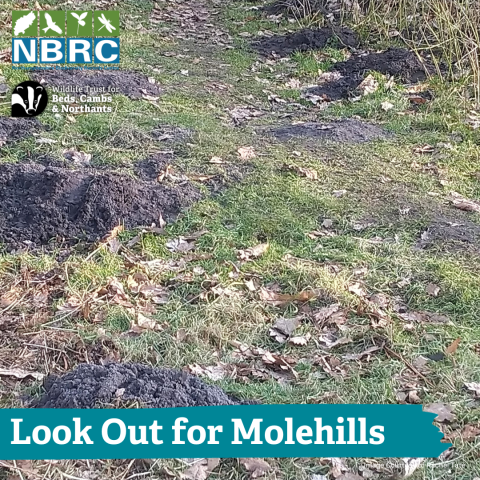
Molehills are a familiar sight in the UK, their appearance is often overlooked but provides us with an important way of recording the presence of moles, as they’re very rarely seen above ground.
The mole Talpa europaea will spend most of its' life tunnelling below the surface. It helpfully aerates the soil and improves drainage while on the hunt for invertebrates to feed on, including some that are considered to be pests. This activity provides a vital role for soil health and the wider ecosystem. Its presence is only really noticed when loose soil is pushed up to the surface creating the easily recognisable little mounds of fresh earth.
Being active day and night they can dig up to 20 metres of tunnel in a day at depths varying from immediately below the surface to 70 cms or more.
Moles are solitary and territorial mammals and won’t share their tunnels with another mole. So, once a tunnel network has been established, the appearance of molehills is usually only when tunnels are being repaired, an individual is expanding their network, on the hunt for a mate or when a young mole is trying to establish its’ own territory.
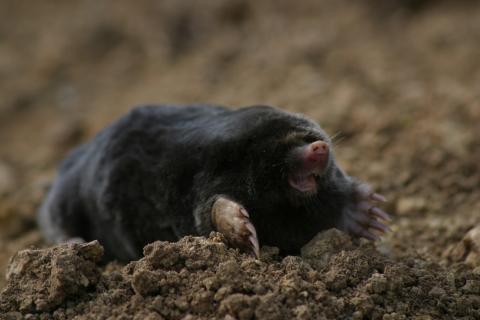
Their distinctive appearance with a stocky, wedge-shaped body, black velvety fur, short tail and long pink snout make them easy to identify. The biggest give away and most obvious feature is their large spade-like front paws, perfectly designed for digging.
However, the only time you’re likely to spot one is if they go above ground to gather bedding materials for their nests or when the young pups are dispersing to find their own territories.
Please submit your sightings using the form below.
If this is your first record submission, please read our quick guide to Using the NBRC Website to Submit Biological Records.
If you would like to submit more than one sighting or plan to submit sightings on a regular basis, please create an account before you submit your sightings. You will then be able to view, edit and download all your submitted records.